
Philanthropy in Action at Bryn Mawr Hospital
When technology meets generosity: How robotic surgery is changing lives at Bryn Mawr Hospital
At the intersection of medical innovation and community generosity lies a powerful story — one where donor support is not just appreciated, but lifesaving. Thanks to philanthropic gifts, Bryn Mawr Hospital is redefining what’s possible in surgical care through advanced robotic technology. The results? Faster recoveries, smaller incisions, fewer complications and shorter hospital stays — and a profound impact on the lives of patients and their families.
Robotic surgeries are performed by specially trained surgeons using sophisticated equipment including cameras and precise surgical instruments that provide better-than-human vision and dexterity. The technique originated primarily for procedures involving delicate, hard-to-reach areas but has since expanded to include cardiothoracic, colorectal, gynecological, and head-and-neck surgery. It is estimated that over 30% of general surgeries in the U.S. will utilize robotic assistance by 2027.
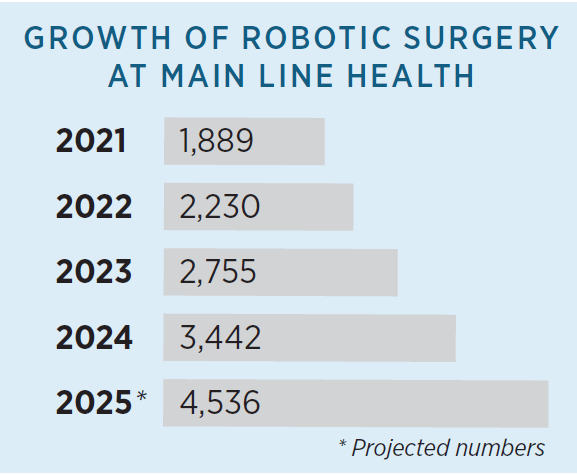
Bryn Mawr Hospital’s first robotic surgery was performed nearly 20 years ago. By 2021, surgeons had maxed out the hospital’s single da Vinci robotic system’s capacity. The number of procedures had grown by 54%, with 17 surgeons using the technology. The surgery department knew that making more systems available would allow more patients to experience its benefits and more surgeons to be trained on them.
Patient anecdotes back up the impressive statistics. Joe Tracey, a patient of Jen Denne, MD, Chief of Surgery at Bryn Mawr Hospital, has had three robotic procedures. He likes to tell the story of how, the day after his latest operation, he had expected to experience some discomfort and to be taking it easy. Instead, he felt so well that he completed his usual three-mile walk at Valley Forge Park, to the amazement of friends who were not expecting to see him there for days, if not weeks.
“Thanks to philanthropic support, two additional da Vinci robots arrived in May 2024 and were in use within days,” said Dr. Denne. "We have tripled our volume since then and can offer robotic surgery 24/7, including for emergencies. We couldn't be more grateful."
This game-changing technology is a reality made possible by the vision of clinicians and the generosity of a community that understands the value of investing in health.
Starting strong: Donor impact on maternal and pediatric care
At Bryn Mawr Hospital, caring for children and families is at the heart of what we do. As the home of Main Line Health's Children's Hospital of Philadelphia-affiliated pediatric unit, we treat infants and children facing illness or injury with expert, compassionate care. We're also proud to welcome over 2,000 new lives each year through our busy labor and delivery unit.
Thanks to donor support, several initiatives are helping us deliver even better care to our youngest patients — and to the moms who bring them into the world:
- Innovative new cardio-obstetrics program that blends education with remote blood pressure monitoring to help patients with hypertensive disorders of pregnancy recover safely at home after childbirth, reducing complications and readmissions
- Part-time pediatric education coordinators who enhance pediatric nurses' professional knowledge and practice
- The purchase of pediatric-specific simulation training tools that prepare caregivers for low-frequency, high-stakes scenarios, ensuring they are ready when every second counts