
Support Main Line Health’s Fund for Endometriosis and Advanced Gynecology

Ending the silence. Advancing the science.
Endometriosis is a chronic, systemic inflammatory disease affecting roughly 1 in 10 reproductive-aged individuals, yet it remains widely underrecognized, underdiagnosed and underfunded relative to its prevalence and impact. Once considered solely a gynecologic condition, it is now understood as a complex, multisystem disorder involving immune, hormonal, inflammatory and neurologic pathways.
Patients often experience chronic pelvic pain, infertility, fatigue and organ-related symptoms, but disease severity does not reliably reflect disease burden. Diagnostic delay averages seven to ten years worldwide, largely because symptoms are normalized, presentations vary, and the current diagnostic gold standard requires surgery. No validated noninvasive biomarker yet exists, and imaging cannot reliably detect the most common form of endometriosis.
Current treatments focus primarily on symptom management — hormonal suppression, multimodal pain therapies and surgery — yet no curative therapy exists, and recurrence is common. Major scientific gaps persist, including limited understanding of disease initiation and progression, incomplete knowledge of pain mechanisms, unclear links between endometriosis and infertility and unclear evidence to guide many routine clinical decisions. Structural barriers such as limited access to specialized care, geographic disparities and historically low research investment further hinder progress.
Role of philanthropy in meeting patient needs
Transforming care for endometriosis requires coordinated multidisciplinary research, biomarker development, evidence-based treatment pathways, early detection strategies and large-scale longitudinal data. These advances are essential to shift the field from symptom management toward precision diagnosis and targeted treatment.
Main Line Health's Fund for Endometriosis and Advanced Gynecology is dedicated to helping clinicians:
- Improve earlier diagnosis, expand access to effective treatments, empower patients with the knowledge and support they deserve and deepen public understanding of this complex disease
- Drive meaningful scientific progress and create a future where endometriosis is recognized, treated and understood with the urgency our patients deserve
Impact of your support
Main Line Health seeks philanthropic support to accelerate scientific discovery and improve the health and wellbeing of patients living with endometriosis. Initial funds will support clinical research studies, research staff and article processing charges for scientific publications.
Our research priorities are shaped by the real questions and concerns we hear from patients every day. Current projects aim to answer:
- How often do patients undergo surgery but are not found to have endometriosis?
- Do medications used to treat endometriosis affect how easily the condition can be identified during surgery?
- Which treatment approach — surgery or medication — most effectively improves quality of life?
By addressing these critical questions, we aim to strengthen clinical decision-making, expand evidence-based care and ultimately improve the lives of those affected by endometriosis.
To advance this work over the next two years, we seek to raise $50,000 to $100,000 in charitable support. These funds will directly support the hiring of dedicated research staff and the continuation of high-impact research projects focused on improving care for individuals with endometriosis.
Every contribution plays a meaningful role — helping us generate answers, improve treatments and make a lasting difference in the lives of patients.
If you are interested in making a gift to the Fund for Endometriosis and Advanced Gynecology, please complete the online donation form below or contact:
Pam Magidson
Director, Gift and Grant Resources
Main Line Health
484.580.4183
magidsonp@mlhs.org
Gifts can be made outright or over a five-year period.
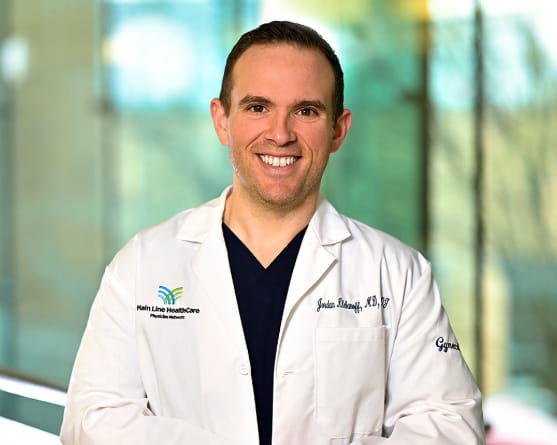
"My ultimate goal is to help eradicate the suffering caused by endometriosis by driving scientific breakthroughs, shaping awareness, and elevating the standard of care for patients now, and for generations to come. It is finally time that we as a medical community give this disease the attention that it deserves."
— Jordan S. Klebanoff, MD, Main Line Health System Chief, Division of Complex Gynecologic Surgery